What is Counselling
Occasionally in your life you may need help to sort out a problem or you may be experiencing feelings that concern you.
Counselling can help you to make some sense of what is happening to you
and support you through difficult periods in your life.
Counselling is not only about listening to you but also about helping
you to understand and accept yourself better and to explore ways of making changes.
Counselling cannot always solve all of
your problems but most people can benefit from having time and space to explore
and express their feelings and emotions and to get help in developing new ways of relating to the world and themselves.
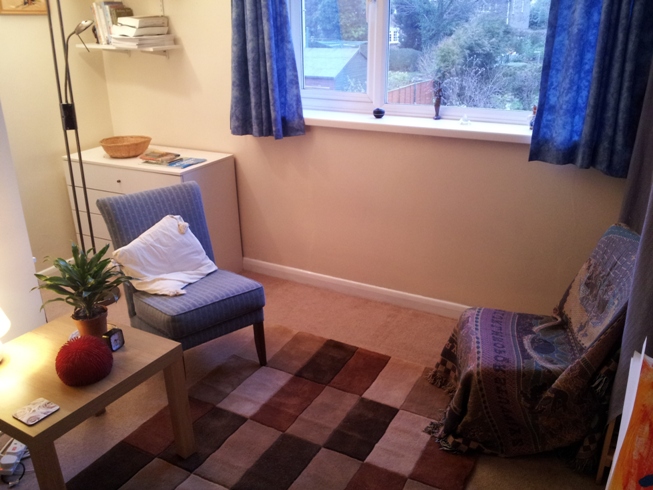
Counselling is sometimes referred to as a “talking
therapy”. This is a style of talk which is carefully focussed on
allowing you to express what is happening for you and upon helping you
to become more aware of yourself and how you think, feel and react to the world around
you, other people and your self.
Once someone has this increased awareness then the possibility of change presents itself.
Perhaps you have never spoken to anyone before about an issue which
troubles you or perhaps when you tried you were not fully heard or
understood. Counselling aims to really hear what it is you are saying
and to hear it on a deeply personal level.
There are three major categories of counselling. These are:
- Psychodynamic – Typically based upon the work of Freud and Jung and other pioneers of the study of the human mind and how it functions.
- Humanistic – Building upon the Psychodynamic ideas but
adding a more human element and with a fundamental belief in the ability
of all people to heal emotionally given the right conditions. My aim is to provide those conditions.
- Cognitive/Behavioural (CBT) – Looking at our thought patterns and behaviours and how they affect our lives. Challenging some of our thoughts and beliefs and helping us to change those which may be hindering our lives.

Although I am primarily trained humanistically my work is also informed by cognitive (CBT) and psychodynamic approaches
plus advances in modern neuroscience and attachment theory.
I hold the firm belief that the ability to move forward is to be found within us all but sometimes we may need a
little help along the way.
Studies have shown that what really counts in a counselling situation
is not so much the theoretical model employed by the counsellor but
more the relationship which is built between the client and the
counselor. Sometimes this relationship can form straight away and
sometimes it may take some time but ultimately it is this relationship
which can prove to be the most healing aspect of counselling. It is for this reason that
I offer a low cost initial sesion so that you can decide whether you feel you would like
to work with me.